On 26 March 2015, two days after Germanwings flight 4U9525 crashed in the French Alps, the Marseille public prosecutor met the families, then stepped in front of the press. Until that moment, we at Lufthansa had been communicating about an accident. But within minutes it had become something else entirely – and the defining words had not come from us. In fact, we heard the prosecutor’s words at the same time as everyone else.
The night before, The New York Times had reported that one pilot was locked out of the cockpit. When the article hit the wires, I was taking a break after my second day in Germanwings’ crisis centre. Minutes later, I was back in that very room with my peers, revisiting our narrative and anticipating what this would mean for the airline. The next morning, the prosecutor gave the answer: this was no accident, but a murder-suicide.
I have thought about that moment a great deal over the past week, watching events around flydubai flight FZ1073 unfold. The two events are very different: In 2015, a suicidal co-pilot took 149 lives along with his own; on 30 September 2026, everyone on board survived.
Yet structurally, they teach the same lesson. Once a crisis acquires a criminal or political dimension (or both), ownership of the narrative passes from the company to the state – or, as in this case, to several states.
FZ1073: what we know – and what we don’t
As of 9 October, the sequence of events is largely undisputed. On 30 September, on a scheduled flight from Dubai to Tel Aviv, the first officer attacked the captain, Smit Machchhar, with the flight deck’s emergency axe. The aircraft lost around 17,400 feet in under two minutes. Despite severe injuries, the captain was able to unlock the flight deck door. Passengers overpowered the attacker, and a second crew member travelling on board landed the aircraft safely in Tabuk, Saudi Arabia.
The picture has since sharpened considerably. The UAE’s Attorney General has called the act attempted terrorism. UAE investigators now say the first officer intended to crash the aircraft into Ben Gurion Airport, modelled on 9/11, and had used two earlier flights to Tel Aviv to familiarise himself with the route and the airport. According to the Wall Street Journal, Oman Air had moved him off flying duties in 2024 over concerns about radicalisation; he left the airline in 2025 and joined flydubai in January 2026.
Much remains open. The first officer, reported to be an Omani national, has not been officially identified. Whether he acted alone or on someone’s behalf is still under investigation.
What follows is about communication, not about guilt.
One incident, five stories
What struck me most in the first week after the FZ1073 incident was not a lack of facts but rather the abundance of narratives. Each government involved told its own story – coherent from its own perspective, but hard to reconcile with the others.
- India told a story of a hero and his values. Prime Minister Modi wrote that the captain had prevented “another 9/11 like attack”, spoke to him by video call and called his family. Indian media amplified the story with religious and cultural references, and Gujarat announced a state honour.
- Israel first told a story of terror and of courageous Israeli passengers, whom the Prime Minister personally welcomed home at Ben Gurion. But within days, it turned into a story of security failure. Israel only admits pilots from countries with which it has diplomatic relations, and Oman is not one of them. The domestic security service, the transport ministry and the tax authority have since publicly disputed who should have checked the crew lists, and the opposition has demanded the transport minister’s resignation – shortly before an election.
- The UAE told a story of a thwarted terrorist act, swift prosecution and a heroic crew, with senior officials publicly praising the captain.
- Oman has, by most accounts, said very little.
- The United States: President Trump said he personally believes Iran was behind the attack; Vice President Vance said that possibility is being examined, but he has seen nothing conclusive.
Media in each country largely followed its own government’s framing.
“None of these narratives was told by the airline.”
None of these narratives was invented, but together they do not add up to one consistent story. And, most importantly, none of them was told by the airline. The Israeli case is a prime example of how short the shelf life of a hero narrative can be: within a week, the question had shifted from who saved the aircraft to who failed to stop the attacker.
Aviation makes such competing narratives especially likely. Whether state-owned or private, airlines act as a proxy for national pride and identity. A government may throw its weight behind one of its most important national symbols – the UAE’s swift public praise for the crew is a case in point. But when several jurisdictions are involved, governments can just as easily politicise an incident for their own ends, and the airline’s own voice gets lost.
The nationalised employee
For corporate communicators, the most instructive thread is what happened to the captain. Within 48 hours, an airline employee was on a widely broadcast video call with his head of government, talking about his faith, his family and the language his children speak at home. Mr Modi told him: “Indians don’t take lives, they risk their own to save others.” Meanwhile, partisans on social media were already arguing about the captain’s own political sympathies.
Notably, the captain himself did not fit the role he was being given. On that same call, he insisted that the others on board had played an equal part. The story told about him had already outgrown the man – and neither he nor his employer could rein it in.
“Few crisis manuals cover this scenario: In an international workforce, any employee can become a national symbol overnight – as hero or as villain.”
Although aviation is multinational by nature, few crisis manuals cover this scenario. In an international workforce, any employee can become a national symbol overnight – as hero or as villain. That employee then speaks directly with heads of state, and the employer has no say in how the story is told. FZ1073 had an Indian captain, an Omani first officer and off-duty pilots reported to be Russian and Ukrainian. Each of them carries a potential national narrative.
Restraint as a position
Against this backdrop, flydubai’s communication reads differently. Its statements were factual and few. The airline deferred to the investigating authorities and asked all parties not to speculate. Its CEO thanked the captain, the crew who landed the aircraft, the passengers who helped, and the Saudi and UAE authorities. All by the book.
It would be easy to mistake this for silence or stonewalling. I see it as a deliberate position – and probably the only one available. An airline that employs everyone involved cannot adopt any single national story without alienating part of its workforce, its passengers or its host governments. In a field of competing narratives, neutrality is not an absence of communication, but a strategy.
The question for the whole industry
One issue lies beyond the reach of any communication strategy: security. According to current reporting, every link in the chain relied on another. Oman Air did not pass its concerns about its former pilot to the UAE. flydubai reportedly checked his criminal record but did not consult Omani authorities. flydubai says it always submitted its crew lists to Israel as required; in Israel, those lists were apparently never retrieved or checked.
“One issue lies beyond the reach of any communication strategy: security.”
After 4U9525, the debate centred on pilots’ mental health and medical confidentiality, and a structural fault line between treating doctors and the licensing authorities. After FZ1073, it will centre on security intelligence and cross-border information sharing. Both are, at heart, questions of who knows what – and who may tell whom. Communicators belong in the room when these processes are designed. When they fail, we are the ones who have to explain them – ideally without the public finger-pointing between agencies now playing out in Israel.
Three take-away-lessons for preparation
- Map the second voice. Anticipate who is likely to take over the narrative if a crisis turns criminal or political – and rehearse being the second voice, not the first.
- Plan for nationalised employees. In a multinational workforce, prepare for heroes, victims and perpetrators becoming national symbols, including support for employees and families when governments call. Think ahead about whether and how you will respond.
- Restraint can be powerful. When several national stories compete, the organisation that does not pick one keeps its credibility with all of them. In a heated debate, being silent can be an asset.
The passengers of FZ1073 survived. Five stories have been told and reshaped since then. The investigation – and the long phase of repair – has only just begun.
Note: This article first appeared on 16 October 2026 on CIPR’s crisis communications network blog page. Newer developments and findings are not reflected in the analysis. Thanks to Chris Tucker and Rod Cartwright for reviewing this text and adding valuable input.
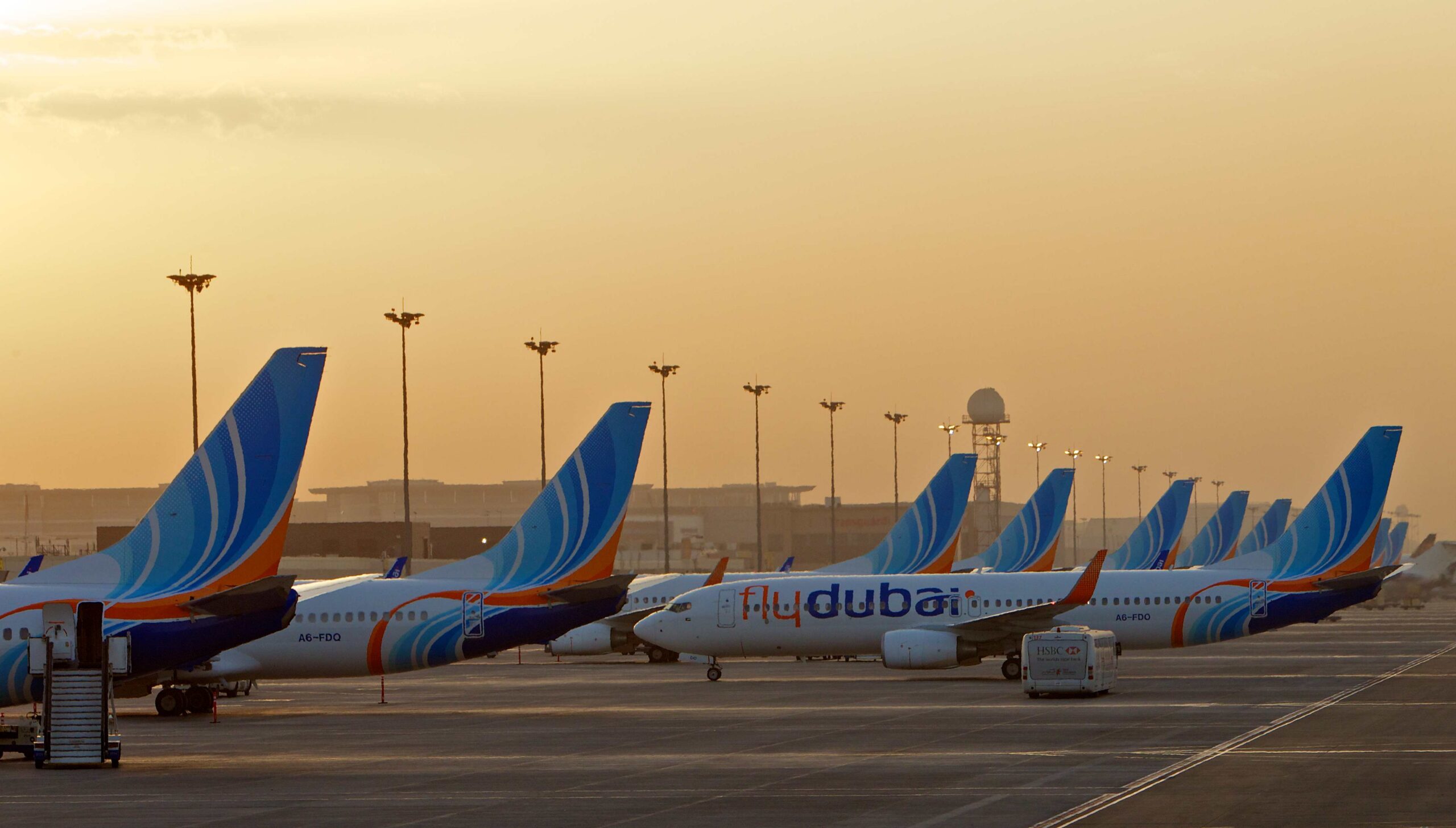
Image: flydubai